
By Sarah Schaefer, [Math]odology
Walk into most schools in August and you will find teachers who are collecting.
A number talk routine from a summer conference. Three fluency games saved from a Facebook group. A questioning framework from last year’s book study. A set of manipulatives someone swore changed everything. A bin of task cards. A new app.
Every single one of those things is good. That is exactly the problem.
By October, the collection is still a collection. The games are in a cupboard. The framework is in a binder. And the teacher who gathered all of it is standing in front of twenty four children who have just done something unexpected with a subtraction problem, wondering which of the forty tools she owns is the right one for this moment.
She does not need a forty first tool.
The reflection that keeps coming back
Here is something I have found myself saying more and more often over the past few years:
“One thing I’ve been thinking about a lot lately is that less is more. In mathematics, everything comes back to a few connected ideas. The more deeply we understand those ideas, the more confidently we can teach. The same is true in our work with schools. We don’t need to overwhelm teachers, we need to help them see what matters most.”
It sounds like a slogan. It is not. It is a working principle, and it is uncomfortable, because it asks us to put things down rather than pick more things up.
What “less is more” does not mean
Let me be clear about this, because the phrase gets misread constantly.
It does not mean lowering expectations. Our goal has never been to make mathematics easier. It is to make mathematics understandable, which is a different and considerably more demanding thing.
It does not mean doing less work. Teaching a small number of ideas deeply is harder than covering a long list. Coverage is a schedule. Depth is a decision you have to make repeatedly, in front of children, in real time.
And it does not mean fewer strategies for students. Students should absolutely explore multiple approaches. Flexibility is the point.
What it means is this: the number of foundational ideas a teacher needs to hold is far smaller than the profession has led us to believe. And when you hold those few ideas securely, the forty tools stop competing for your attention. They organise themselves.
What a few connected ideas actually looks like
Take part and whole.
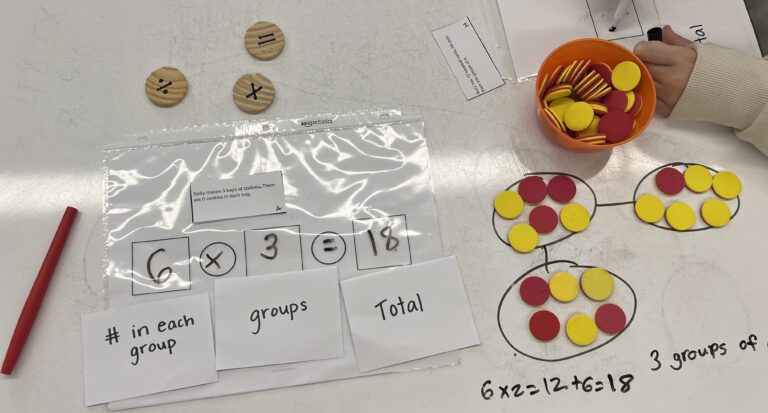
A kindergarten child builds a number bond and sees that five is made of two and three. That is the idea.
A first grader meets subtraction and discovers that subtraction names the missing part. Same idea.
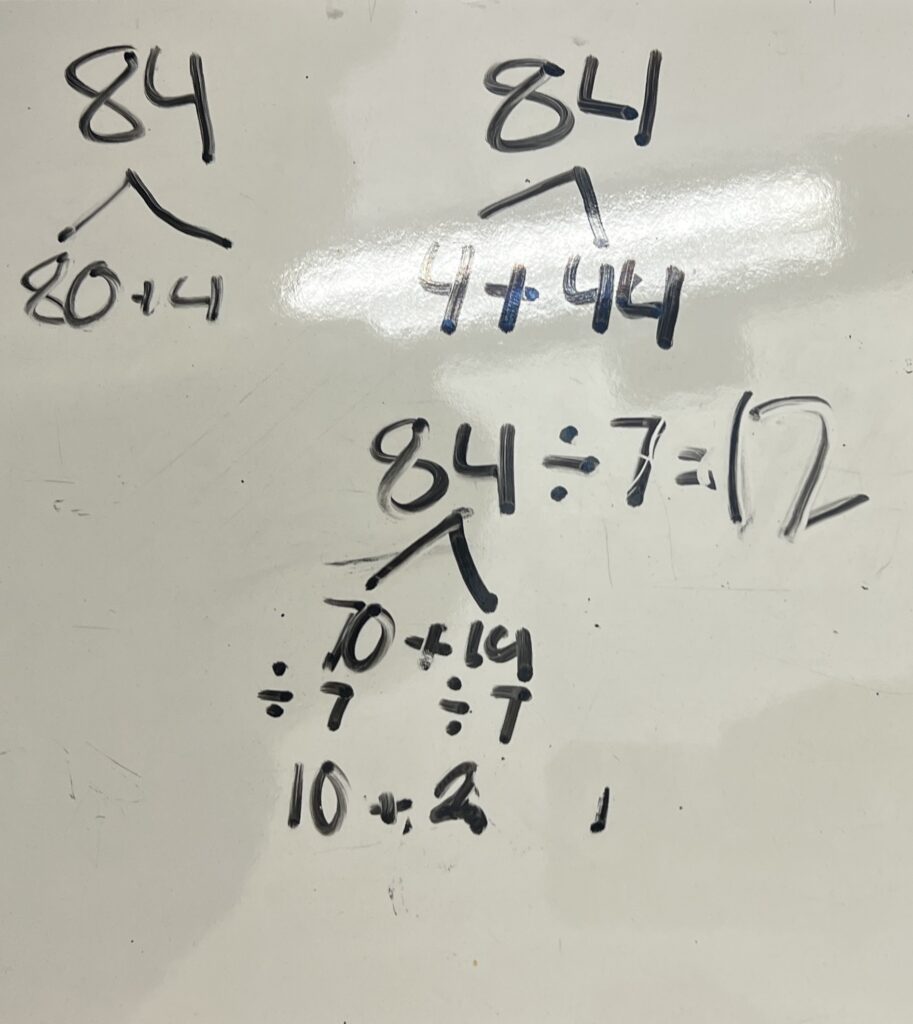
A second grader partitions 300 into two hundreds and ten tens, then into thirty tens, and realises a number can be taken apart in more than one way without changing its value. Same idea.
A third grader regroups across place value. A fourth grader sees a fraction as parts of a whole. A fifth grader works with a bar model where one quantity is composed of others. A ninth grader factors an expression.
Same idea. Every time.
That is one thread. There are not hundreds of them. When a teacher understands that thread, a child’s unexpected answer stops being a crisis. It becomes information. You can hear where the child is on the thread, and you know what question to ask next, because you know where the thread goes.
This is what we mean when we say mathematics is connected. Not as a nice sentiment about the beauty of the subject, though it is beautiful. As a practical claim about how much a teacher actually has to carry.
The same principle applies to teachers
We see this in professional learning constantly.
A school will ask for a session on fluency, a session on word problems, a session on assessment, a session on differentiation. Four sessions, four sets of notes, four sets of strategies. Teachers leave with a great deal of material and, often, no more confidence than when they arrived.
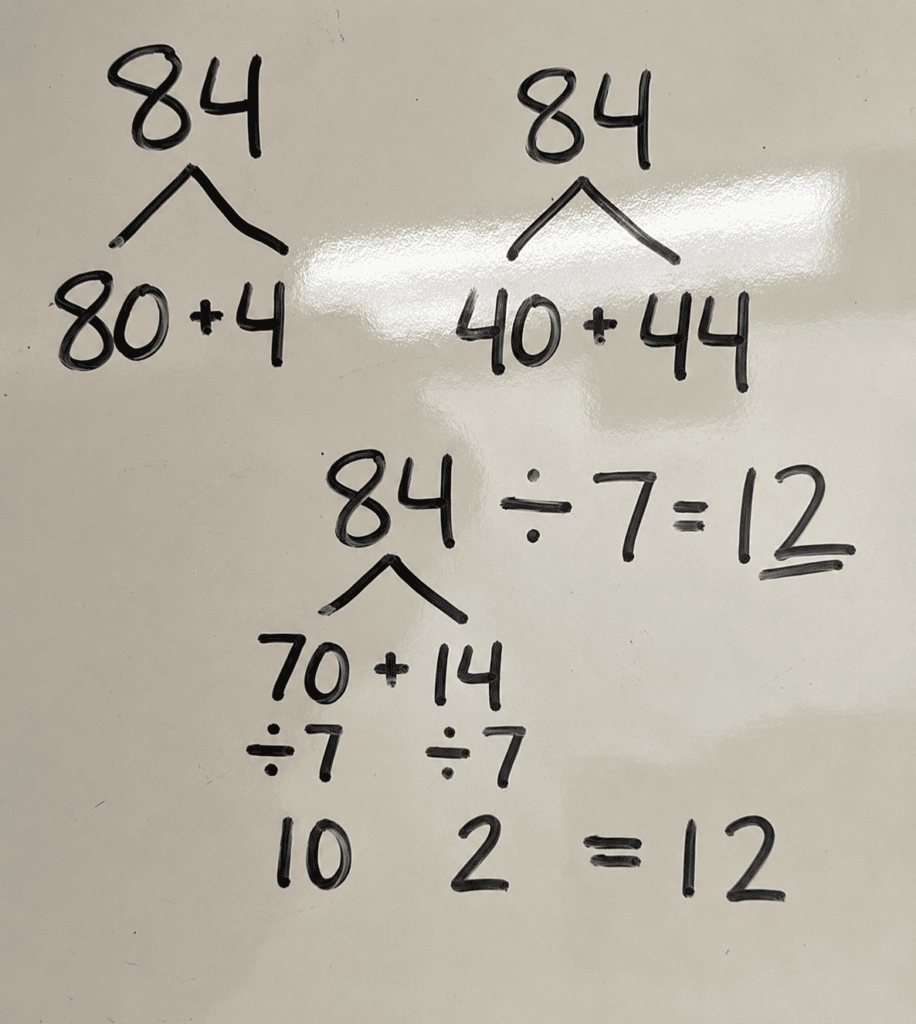
Compare that to a team that spends the same amount of time on one thing: understanding decomposition well enough to recognise it in fluency, in word problems, in assessment, and in the child who is struggling. That team does not leave with more material. They leave able to think.
One of our colleagues writes about giving students a Go To Strategy: choose the primary strategy, teach it first, and tell students plainly that this is their anchor. Do not keep it a secret. The instinct behind that is exactly the same instinct. Fewer things, held more securely, used more confidently.
Teachers do not need hundreds of disconnected strategies any more than students do.
Three things you could put down this month
If you want to test this rather than agree with it, here are three practical moves for the start of the year.
Pick one idea per unit, not one strategy per lesson. Before you plan the lessons, write down the single mathematical idea the unit rests on. Then check each lesson against it. Anything that does not serve that idea is a candidate for cutting.
Name the thread out loud. When you introduce something new, say where students have met it before. “This is the same part and whole thinking you used with number bonds in first grade.” Children do not make these connections on their own unless we point them out, and every time you name one, you are reducing the amount they have to memorise.
Take one thing off the list. Not the thing you dislike. Something you genuinely thought was good, but which is not connected to the idea at the centre of the unit. This is the hard one. It is also the one that tells you whether you believe any of this.
Where this leads
Depth creates understanding. Understanding creates confidence. Confidence creates independence, for teachers as much as for children.
The teacher who has stopped collecting is not a teacher who knows less. She is a teacher who is no longer afraid of the moment when a child does something she did not plan for, because she understands the mathematics well enough to follow them there.
That is the whole of it, really. Less to carry. More to notice.