By: Tara Lucidon, Math Specialist
As a math specialist in a Connecticut K-4 elementary school, I’ve seen firsthand how the typical day of an elementary school teacher can quickly erupt into a volcano of tasks. Teachers arrive early to prepare for their day, ensuring that boards are clean, desks are in order, and materials are ready. They review lesson plans, make copies, and before you know it, the floodgates open as students pour into the room. The questions begin: Where’s my pencil? What special do we have today? Can I call my mom to bring my lunch? Daily schedules fill up with answering these questions, alongside teaching, planning, and supporting individual needs.

The demands of a packed day, compounded with ever-growing to-do lists, can feel like sprinting on a hamster wheel: constantly moving, yet feeling like you’re circling back to the same tasks day after day. Are our teachers passionate about their work? Absolutely. But the constant forward spinning rotation of that hamster wheel leaves little time to step back, plan intentionally, and engage in proactive strategies that could make each lesson more engaging. Teachers need time and support to create the kind of intentional, purpose-driven lessons that truly resonate with students.
A recent inquiry by the National Center for Education Statistics revealed that teachers work an average of 52 hours a week, with nearly 28% of that time devoted to administrative tasks rather than direct instruction (NCES, 2020). It’s no surprise that nearly 80% of educators report burnout, with many saying they are emotionally drained and considering leaving the profession due to excessive stress and workload demands. (AFT 2023). Research indicates that when teachers engage in collaborative professional learning, they see an increase in student achievement, with studies showing that effective professional development can lead to a 21% gain in student performance (ies.ed.gov). Given these insights, my question is: How can we tackle the think! Mathematics units with purpose and fidelity? It’s time for instructional leaders to advocate for systems that prioritize collaborative lesson study and meaningful professional development, ensuring that teachers have the resources and time they need to create engaging learning experiences for their students. Research shows that when schools prioritize collaboration and professional development, teachers report higher job satisfaction and lower turnover rates, creating a more stable learning environment for students (Ingersoll & Strong, 2011). This not only impacts teachers but leads to improved student outcomes and fosters a love for both teaching and learning.
Fortunately, in our school, we’ve established a supportive framework that empowers teachers to collaborate and grow together. Rather than simply running in place on that never-ending hamster wheel, we’ve cultivated an environment where teachers pause the ongoing rotation, reflect on best practices, and collaboratively study, create, and deliver lessons with purpose and intentionality. Each month, we dedicate time for extended data teams: grade-level Professional Learning Communities that meet for at least 1.5 hours, allowing teachers to engage in deep reflection, analyze student data, and align instruction with actionable goals. These dedicated sessions give teachers the space they need to grapple productively and collaboratively, ensuring that their work is always purposeful and impactful.
The think! Mathematics program is designed with teacher feedback in mind, ensuring it is purposeful and responsive to both teacher and student needs. Each Mathodology unit comes loaded with a wealth of resources, including just-in-time videos, lesson planning guides, assessment reflections, and focused roundtables on critical topics such as fact fluency, number sense, and creating anchor tasks. These tools break concepts into lessons that deepen teachers’ understanding of the math behind the standards. However, these toolkits do not provide the time to fully dig into the resources and craft the best possible learning experiences for students.
In our district, we support this effort by providing dedicated sessions where teachers come together, explore resources, and design effective learning plans. Our sessions are grounded in mentor texts likeBuilding Thinking Classrooms and Culturally Responsive Teaching and the Brain, which provide frameworks for deep, student-centered learning. We also integrate Universal Design for Learning, collaborating with the special education teacher, grade-level team, and myself as math specialist to support high-needs learners while enhancing access and engagement for all students.
Each session involves hands-on exploration of theMathodology curriculum maps and toolkits to build a clear understanding of the standards and expectations. Teachers complete end-of-unit assessments themselves, examining visuals, vocabulary, and core concepts to anticipate student needs and challenges. Together, we lift tasks from the units and prepare hints or extensions to enrich learning or provide additional support, ensuring every student can engage with the material at their level. We focus on transforming these tasks into hands-on experiences, placing them directly into students’ hands for active exploration and inquiry.
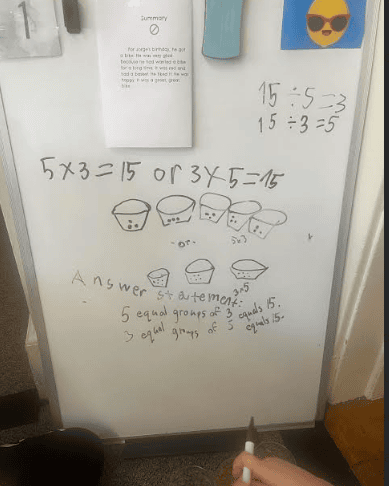
Let me illustrate this with an example. Consider a division problem from the textbook that presents a picture of 12 eggs in a carton, asking, “How many ways can these eggs be split up with friends?” When teachers must teach reactively due to time limitations, they might clip this task from the textbook, put it on a PowerPoint slide, and use that as the anchor task. While this meets an immediate need, it often results in an abstract and uninspiring learning experience, missing the depth that comes from intentional collaboration and lesson study.
Now, imagine if teachers had the time to collaborate and collectively design engaging toolkits filled with items like small figurines, pictures of cookies, and cups. Students could explore ways to create equal groups for a preschool exploration club, making the learning experience tangible and relevant. For example, students might pack these “equal group kits” and deliver them to preschool classrooms for hands-on activities. Third graders learning formal division symbols for the first time could create learning spaces for second graders, who will soon explore foundations for multiplication in their “Equal Groups” unit. Experiences like these deepen students’ understanding, foster mentorship, and build a sense of community as students and teachers share their knowledge and enthusiasm for math.
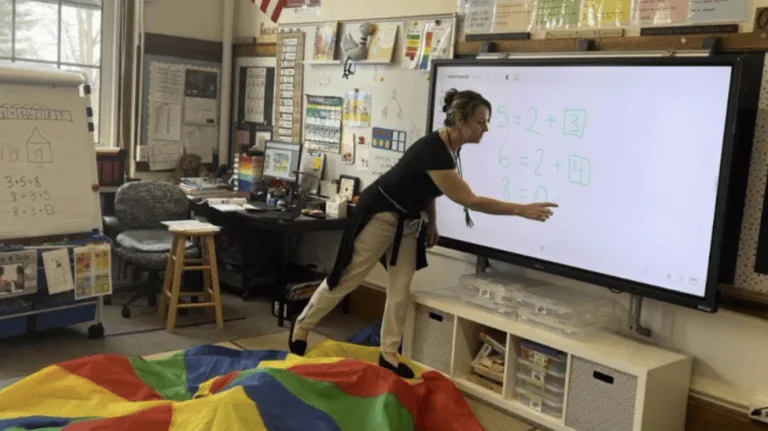
Here’s an example from a first-grade lesson that shows how collaboration and productive grappling can bring math to life. During a recent PLC, the first-grade team and I explored Unit 3: “Subtraction Within 20”. We dug into the resources, rolled up our sleeves, and began lifting tasks. Lesson 2 focuses on subtraction by counting back or counting on, with an anchor task showing three children sitting on a log outside a tent and asks, “How many children are inside the tent?”
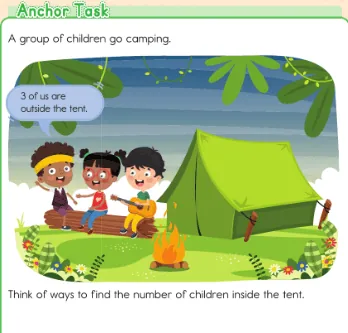
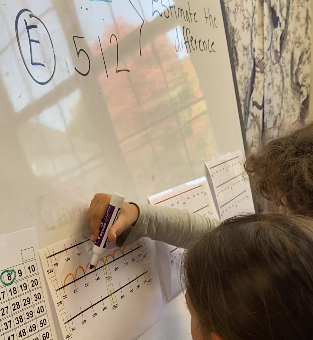
Right away, we could see its potential, this task practically begged to be brought to life for the students. Instead of just presenting the task as it appeared in the book, the teachers borrowed a parachute from the gym and recreated the scene. Students took turns going under the parachute (representing children “inside the tent”) or staying outside (representing “Part-Part”). While some students played active roles under or outside the parachute, others acted as problem solvers, using number bonds and number lines to apply counting-up or counting-back strategies to determine how many were under the parachute.
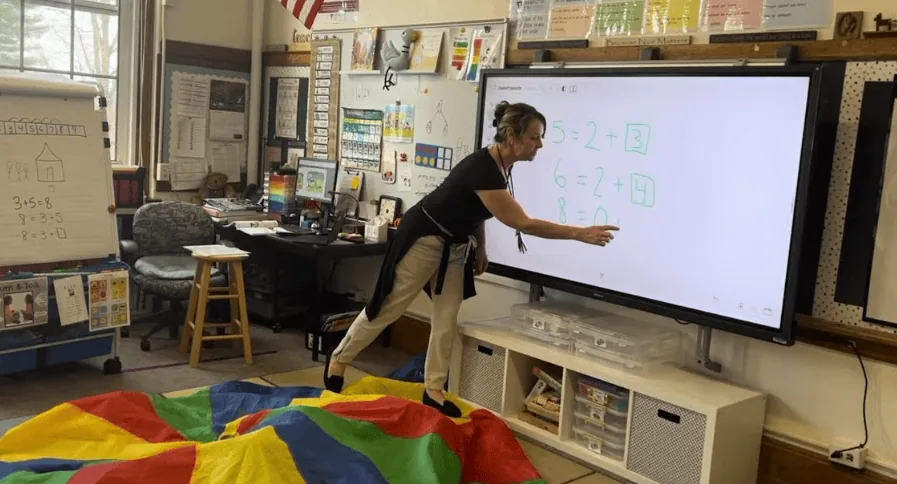
If only you could hear the giggles behind this picture… from both students and the teacher! The energy was contagious as students eagerly took turns, applying their math skills in real-time while enjoying the hands-on experience. Moments like these transform a math lesson from abstract to unforgettable. This example highlights the importance of meaningful collaboration; it’s through working together that we turn standards into experiences that truly engage and inspire students.
When educators have time and space to discuss the math behind the standards and explore student learning progress across their school, it fosters a sense of ownership and efficacy that might otherwise be missed.
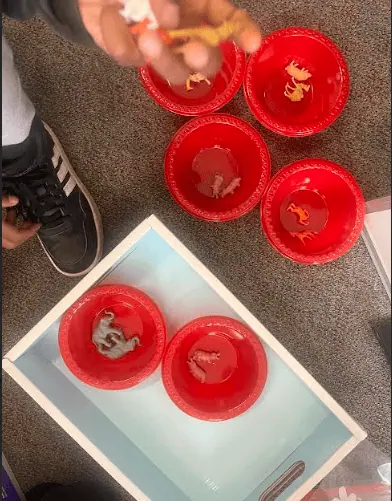
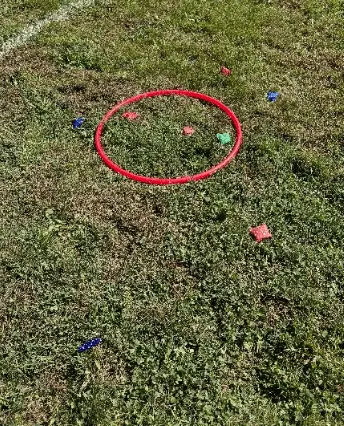
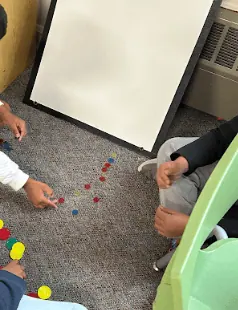
Building collective, long term capacity among educators is a powerful and effective way to transform student learning. After participating in collaborative lesson study, I witnessed first graders learning number bonds outside with hula hoops and bean bags. They tossed the bean bags noting how many landed inside the hoop and how many outside, then counted the total to understand the part-part-whole relationship. Check out the picture! Kinda looks like a number bond, right?
Similarly, I observed second-grade teachers using pictures of their own children to introduce subtraction with regrouping in a way that was both purposeful and engaging. In another example, students explored division concepts using ice cube trays and counters while preparing for a school bake sale. They simulated dividing different types of baked goods into equal groups for various selling stations, allowing them to visualize division, understand how to share items equally, and connect math to a real event they were excited about.
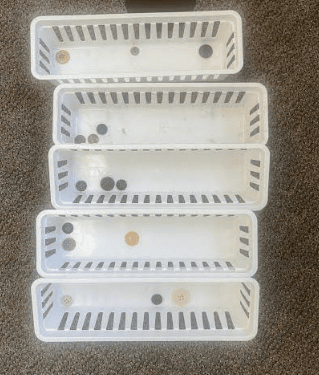
Manipulating concrete tools helps students build a conceptual understanding of math that truly resonates. When we lift tasks off the page and put them into students’ hands, we create opportunities for exploration and engagement that deepen their learning. In contrast, without structured time for meaningful collaboration and shared brainstorming within professional learning communities, lessons can fall flat, leaving teachers feeling uninspired and students disengaged.
I’m fortunate to be part of a district that is responsive to teachers’ needs, allowing me to leverage professional development, extended data teams, and coaching cycles to support this critical capacity building. In our school, Professional Learning Communities foster collaboration and shared learning. Through lesson study, teachers can delve deeper into their practice, share insights, and learn from one another.
Building long term capacity is rich, enduring, and empowering for teachers. By investing in professional learning communities and collaborative frameworks, we strengthen our teaching practices and cultivate a sense of efficacy that reinforces the meaningfulness of our work. Just as a doctor is called to heal, we are called to teach. Our role is vital, and the systems we create should support us in being the very best for our nation’s most precious resource: our children.
Now is the time for action. We must advocate for systems that prioritize this crucial work, ensuring teachers have the time and resources to engage meaningfully in professional development. By fostering professional learning communities, we empower educators to thrive, ultimately benefiting the students we serve. Let’s lead them out of the hamster wheel of reactive teaching and into a space where purpose, collaboration and creativity are not only fostered but celebrated. Together we can create classrooms filled with engaged, curious mathematicians who see the wonder, beauty, and relevance of math in their everyday lives.